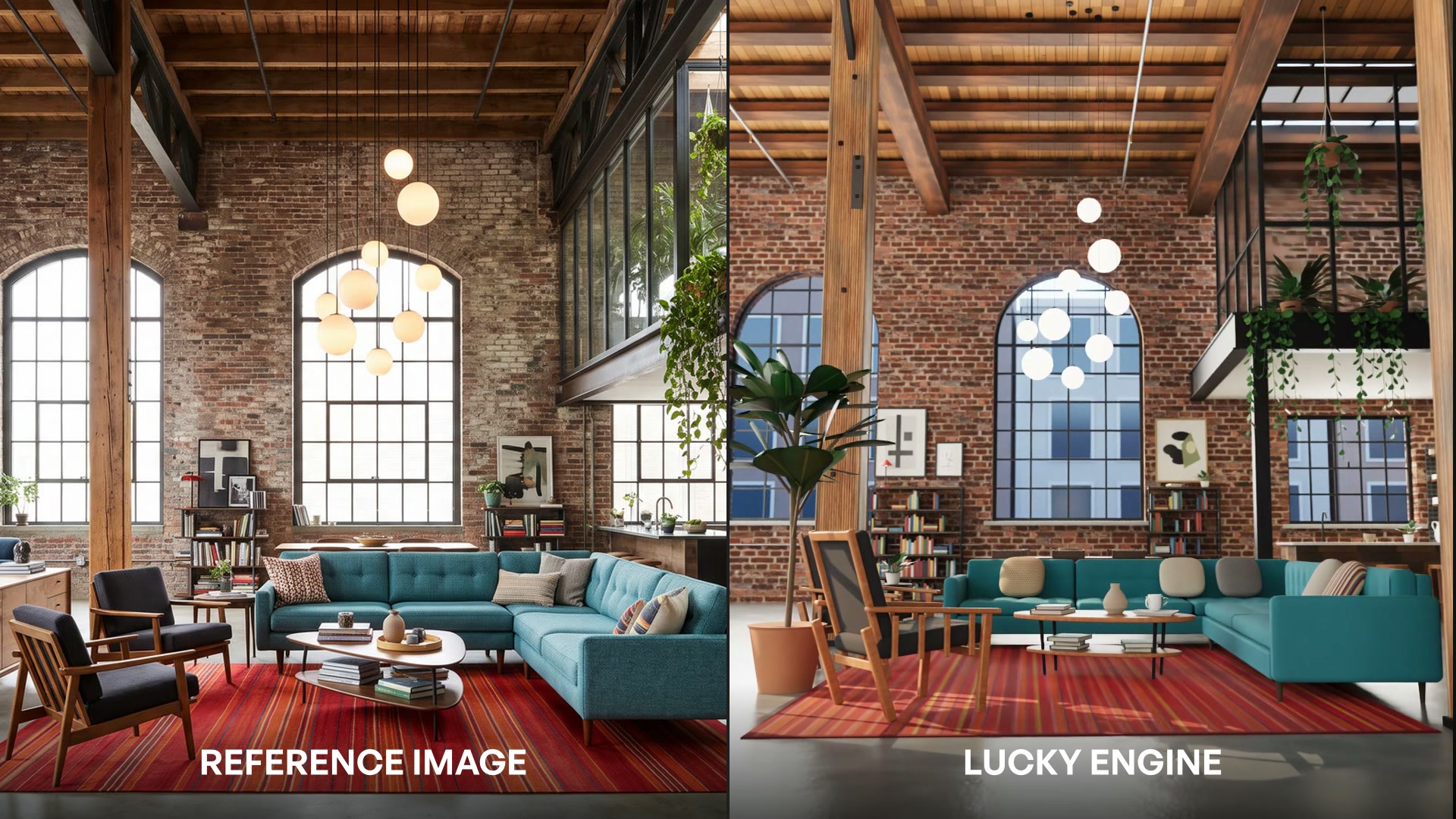
Company · Oct 07, 2026
Why did we build Lucky Engine?
Lucky Engine is a game engine built from the ground up for robotics. Robotics data needs to be accurate, safe, cost-effective and fast. We’re combining the best of both worlds to fill the training data gaps the industry has.
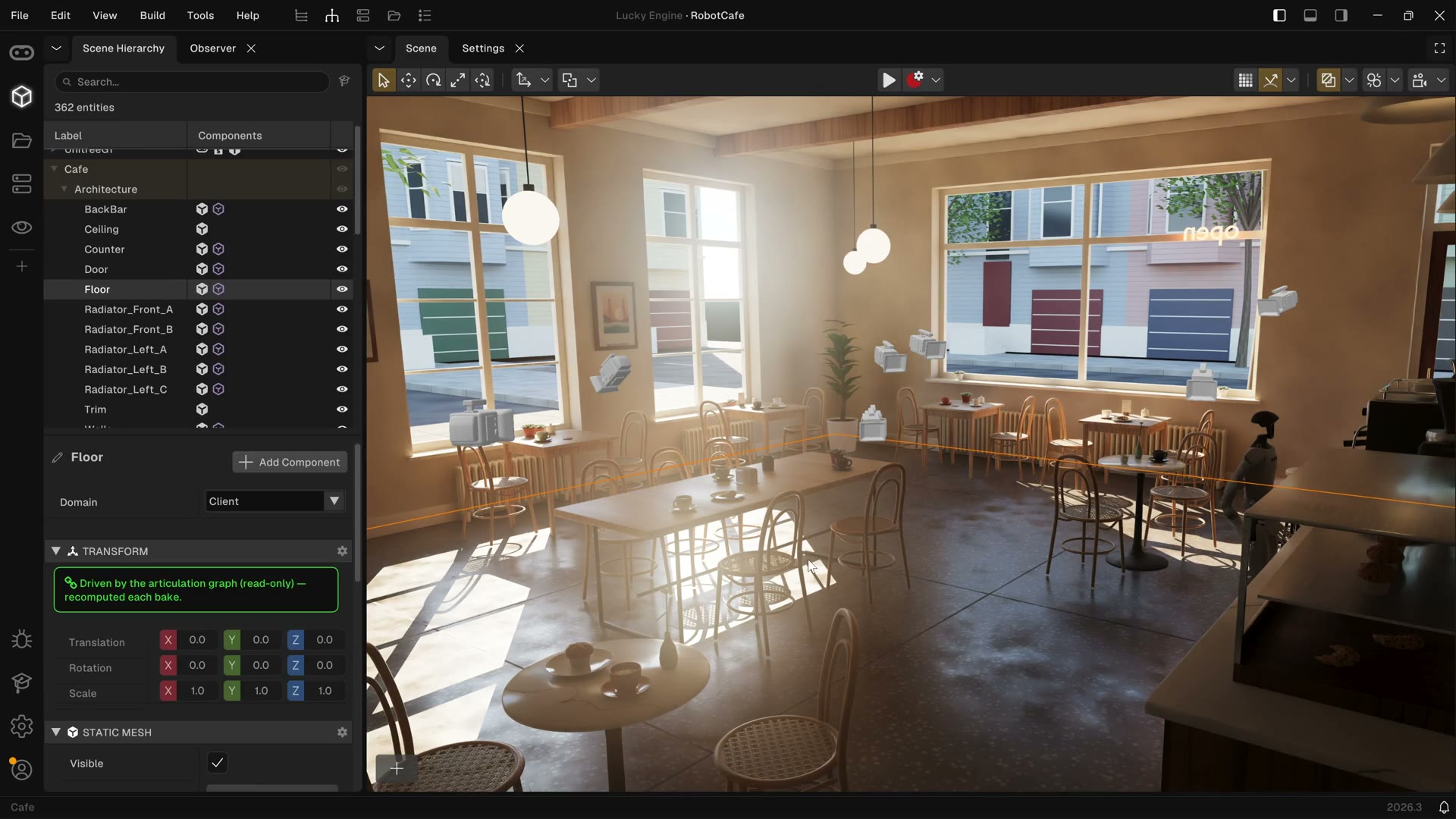
Every robot that ends up working in a warehouse or a home has to learn how our world works first, and there will never be enough people or enough time to film all the data that takes. So robots need robot worlds where they can fail and try again as often as they like before they touch the real thing, and the people who have spent the longest building worlds are game developers.
What we took from games
Game engines have been simulating worlds for decades, and they’ve become really good at making worlds look and behave real. They’ve also been building editors fast enough for the people making those worlds to keep up. We wanted both for robotics: worlds real enough for a robot to learn from, and tools that make it quick to build a lot of them. Your robotics training software doesn’t need to be hard to understand or slow.
Why a game engine couldn’t do the job
People often ask why we didn’t build on top of an existing engine. The short answer is that we couldn’t. A game engine exists for the person playing, and so does everything in it, right down to the main loop. At its core, a game engine is built to get the next frame on screen in time and react to whatever the player does next. When the machine falls behind, the engine quietly skips work so the game still feels smooth. For a player that’s the right call, because nobody notices one missed physics step.
That doesn’t work for training data. A skipped step is a gap in the recording, and a robot trained on that recording never knows it was there. That trade-off sits at the very core of how game engines are built, so switching it off would mean rewriting the engine from the inside out.
So we built Lucky Engine, from the ground up, so robotics data is the focus. Since it never has to deliver frames to a player in real time or wait for them to respond, it can run far faster than real time. Nothing you record is thrown away, and every value is written at the exact simulated nanosecond it happened, even when a run goes on for weeks.
Data that robots use
Since we were starting from scratch anyway, we built Lucky Engine around what robots need. This means integrating MuJoCo physics and being able to read simulated data with game engine solutions. Details like a virtual camera with a real lens, aperture and sensor are built into the engine directly. To make scenes look real, we built our own Vulkan renderer with path-traced light, so light bounces, shadows fall and reflections behave the way they do in the real world.
The same run, every time
Owning the engine’s main loop is also what lets us promise determinism. Everything runs on one fixed-rate clock, and every tick happens in the same order: the sensors are read, your policy decides, physics steps forward, and the result is checked and recorded.
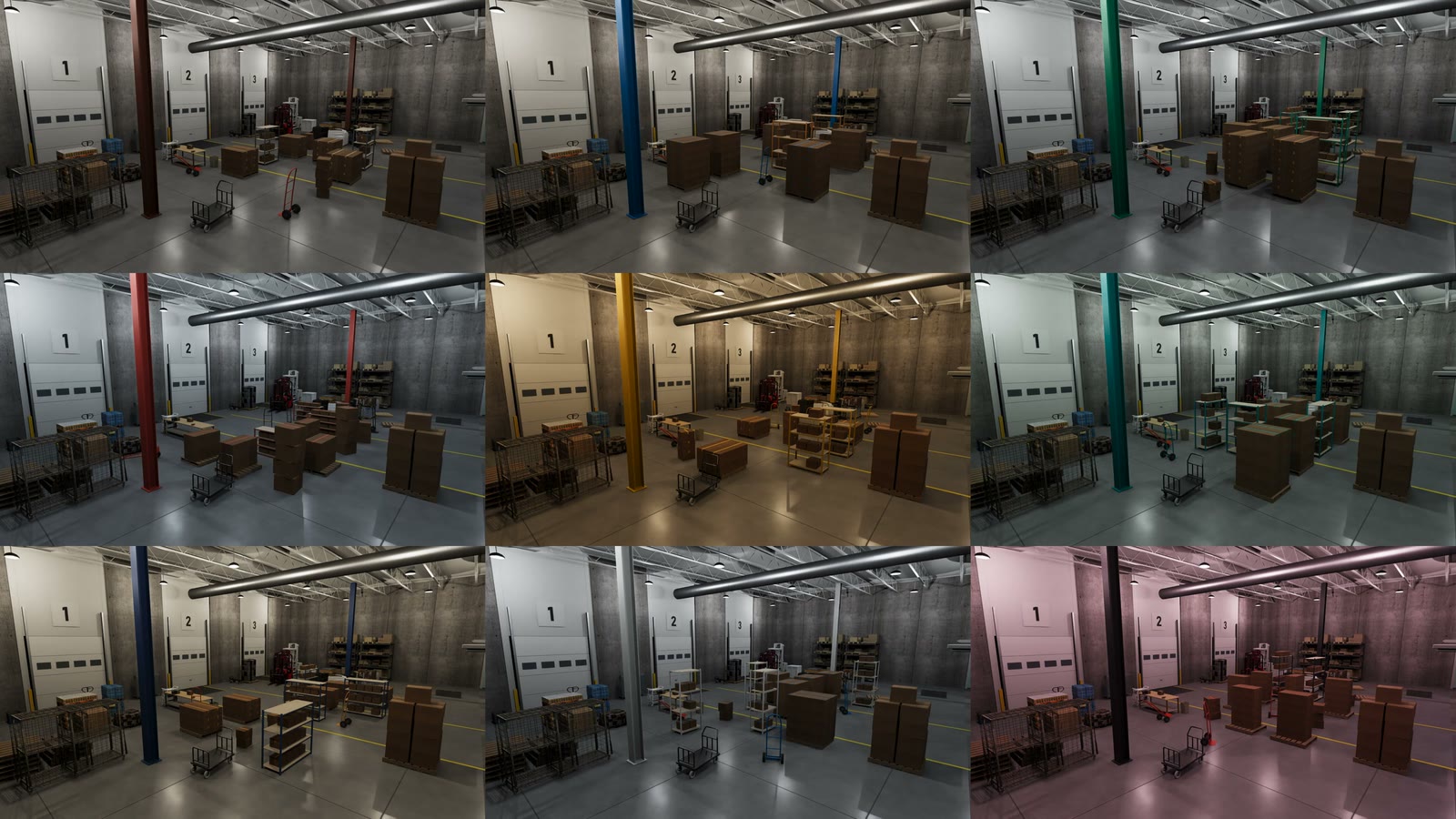
One warehouse dock at nine different seeds. Each seed sets the colour of the columns, the lights and the stock laid out on the floor. Includes 3D assets from NVIDIA SimReady (CC BY 4.0), modified.
When we recorded one kitchen at seed 30 twice in Lucky Engine 2026.3, every file in both datasets hashed the same, across 181 frames with 253 values in each. If a run ever can’t be reproduced bit for bit, its metadata tells you, so you always know which data you can rely on.
The people who built it
An engine takes people who have built one before. Our engineers shipped engine technology on Frostbite at Electronic Arts and created the Hazel engine, which Lucky Engine grew out of.
You can feel that history when you use it. The editor works the way game developers expect, with C# scripting, and you don’t need ROS or a physical robot to get started. You can even give an AI agent a single photo and a prompt and let it build the scene for you.
If you’d like to see it for yourself, download Lucky Engine, build a world, bring your robot and record your first episode.